

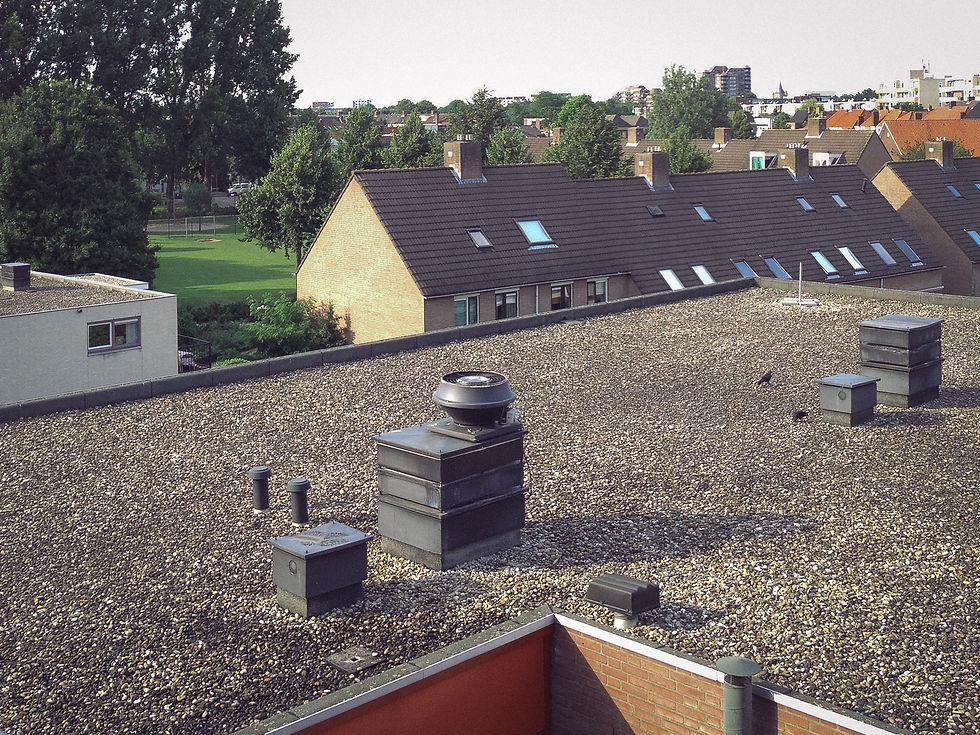
What makes a flat roof last
Build-up planned as one
Deck, vapour control, insulation and covering are considered as a full roof system.
Drainage detailed early
Falls, outlets and edges are planned first so water has somewhere proper to go.
Junctions get proper attention
Upstands, seams and perimeter details are finished carefully to resist leaks.
Building the flat roof from the structure up
A new flat roof begins long before the covering is laid. The supporting deck, drainage falls, outlets, upstands and edge details all need getting right first, because poor planning at those points is where many later problems start. In Swansea, we install flat roofs as complete systems, not just as a surface rolled out over whatever sits below. The deck, vapour control layer, insulation and weatherproof covering each have a job to do, and the finished roof works best when those parts are planned together from the start.


Choosing the covering and detailing the weak points
Choosing the right covering is not only about appearance. Roof use, detailing complexity, maintenance expectations and how the surface will meet nearby walls or penetrations all shape the decision. We pay close attention to outlets, seams, upstands and perimeter edges so water is directed away properly and the vulnerable joins are treated with the care they need. Final checks focus on drainage and secure junctions, followed by straightforward guidance on how to look after the roof once it is in service.
Frequently asked questions
What makes a flat roof drain properly?
The falls, outlets and edge details need planning before the covering goes down. Water should have a clear path off the roof rather than relying on luck and evaporation. If those basics are wrong, even a good surface material can be left fighting a losing battle from the day it is fitted.
What layers make up a new flat roof?
The build-up commonly includes the supporting deck, a vapour control layer, insulation and the weatherproof covering on top. Each layer has a different job, and the finished roof works best when they are planned together rather than treated as separate add-ons.
Which parts of a flat roof need the most care?
Outlets, upstands, seams and perimeter edges usually deserve the closest attention because they are common leak points when detailing is poor. Getting those areas right is just as important as the main field of covering, because water often finds the overlooked join long before it beats the centre of the roof.