


What good slate work depends on
Slate chosen with care
Pitch, loading and look all help decide whether slate suits the roof.
Neat courses, secure cover
Headlap, battens and fixings are set properly so the slates perform as well as look.
Matching repairs matter
Replacement slates are chosen to preserve both weather cover and appearance.
Why slate needs the roof beneath it to work
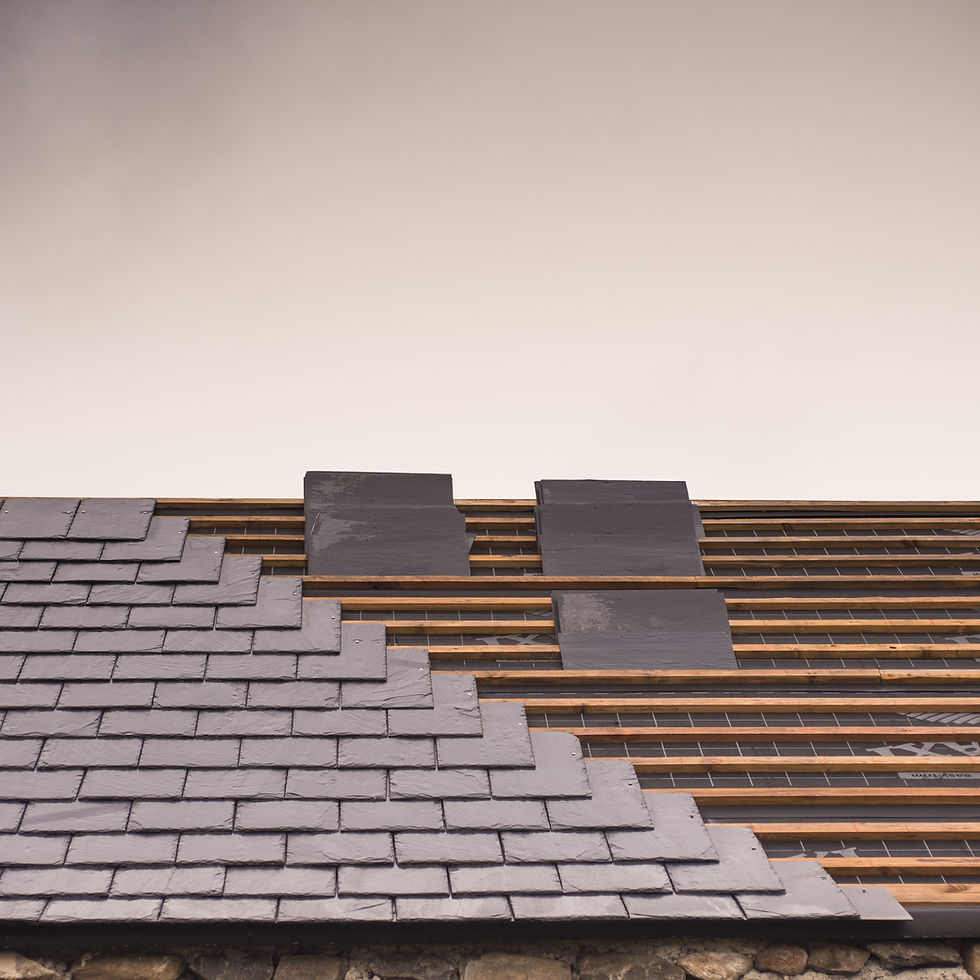
Slate has a look that suits many homes, but it also needs the roof beneath it to be right. The pitch, gauge, loading and fixing pattern all affect how the finished roof performs. In Swansea, we carry out slate roofing work for new roofs and repairs, helping you judge whether slate suits the property both visually and practically. Sound battens, proper headlap and secure fixings matter just as much as the slates themselves. Get one part wrong and the neat lines on the outside will not count for much once wind and rain start testing the roof.

Repairs that respect the look of the roof
When a slate slips or cracks, the visible defect is only part of the story. We also check neighbouring slates, fixings and nearby junctions to see whether movement, age or weathering has affected the surrounding area. Matching replacement pieces help preserve the look of the roof while restoring its cover, and careful setting out keeps the courses tidy. That matters on older roofs especially, where an obvious mismatch can look awkward even after the leak has gone.
Frequently asked questions
Is slate always the right choice for a pitched roof?
Not automatically. The roof pitch, structural loading, existing style of the property and the look you want all need considering first. Slate suits many homes very well, but the covering has to match the roof beneath it and the practical demands of the build, not just the appearance from the street.
Can slipped or cracked slates be matched neatly?
In many cases, yes. Matching replacement pieces help preserve both the weather cover and the appearance of the roof. We also check the neighbouring slates and fixings, because replacing one obvious defect without looking at the surrounding area can leave the next weak point waiting in line.
Why do neighbouring slates need checking too?
When one slate has moved, cracked or failed around a fixing, the surrounding slates may have been affected by the same age, wind or fixing issue. Checking only the visible defect can miss a wider pattern of movement, which is a poor bargain if you are trying to avoid another repair shortly after.